
How Fast Can a Plane Go? Commercial, Military, and Record Speeds Explained
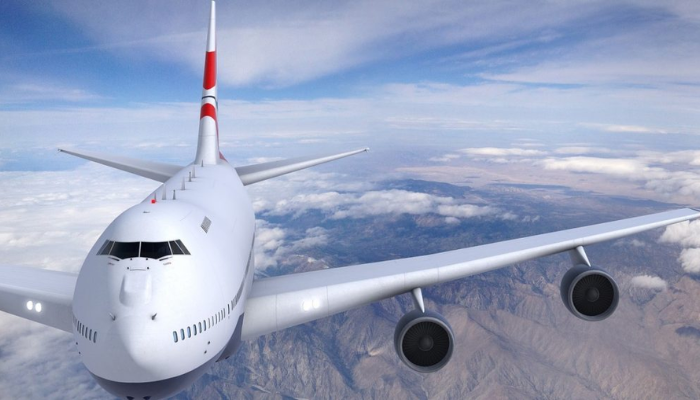
Have you ever looked out of an airplane window and wondered just how fast you are actually traveling? A modern passenger jet can cross several countries in a matter of hours, but commercial aircraft are nowhere near the fastest airplanes ever built.
So, how fast can a plane go? The answer depends heavily on the type of aircraft. A typical passenger jet cruises at around 500–600 mph, while military aircraft can travel at several times the speed of sound. Specialized research aircraft have gone much faster still.
In this guide, we’ll look at the speeds of commercial airliners, private jets, fighter aircraft, supersonic planes, and some of the fastest aircraft ever flown. We’ll also explain what Mach numbers mean and why airplanes cannot simply keep accelerating indefinitely.
How Fast Can a Typical Passenger Plane Go?
Most modern commercial passenger aircraft cruise at roughly 500–600 mph (800–965 km/h), depending on the aircraft, altitude, temperature, weight, and operating conditions. NASA notes that today’s larger airliners cruise at about 600 mph, or roughly 80% of the speed of sound.
That means a long-distance flight can cover a surprisingly large distance in a relatively short time. For example, an aircraft cruising at 575 mph could theoretically cover 2,300 miles in four hours, although actual flight times are affected by routing, wind, takeoff, climb, descent, and air traffic.
Passenger aircraft generally fly below the speed of sound. This is known as subsonic flight. Flying below Mach 1 allows commercial aircraft to balance speed, fuel efficiency, passenger comfort, and aerodynamic performance.
The exact cruising speed varies from one aircraft to another. Airlines also do not necessarily operate an aircraft at its absolute maximum speed. A slightly slower cruise can be more economical and may make more sense for a long flight.
What Is Mach Speed, and How Fast Is Mach 1?
When talking about very fast airplanes, you will often hear the term “Mach.” Mach is a ratio comparing an aircraft’s speed with the local speed of sound. Mach 1 means traveling at the speed of sound.
The important word here is “local.” The speed of sound changes with atmospheric conditions, particularly temperature and altitude, so Mach 1 does not always correspond to exactly the same number of miles per hour.
Aircraft speeds can be described in several ways, including knots, miles per hour, kilometers per hour, and Mach numbers. The FAA, for example, allows true airspeed to be specified in knots or as a Mach number in flight-plan information.
A useful general guide is:
- Below Mach 1: Subsonic
- Around Mach 1: Transonic
- Above Mach 1: Supersonic
- Above Mach 5: Hypersonic
NASA defines hypersonic flight as speeds greater than Mach 5.
This is why saying that an airplane travels at “1,000 mph” does not tell the whole story. At high altitudes, Mach number can be a more useful way of describing how close an aircraft is to the speed of sound.
How Fast Can a Commercial Jet Go?
A commercial jet can usually fly considerably faster than the speed you might experience on the ground, but its maximum operating speed is not necessarily its normal cruising speed.
Large modern airliners generally cruise around the high-subsonic range. NASA gives roughly 600 mph as a representative cruising speed for today’s larger airliners.
There is a good reason commercial aircraft remain below the speed of sound. As an aircraft approaches Mach 1, airflow around parts of the airplane can become supersonic even though the aircraft itself has not yet reached the speed of sound. This transonic region creates additional aerodynamic effects and drag.
Commercial aircraft are therefore designed around a compromise. Airlines want an airplane that is fast enough to make long-distance travel practical but efficient enough to carry passengers and cargo economically.
That is also why the fastest possible speed is rarely the most useful speed for an airline. Fuel consumption, engine performance, aircraft weight, maintenance, route length, and passenger comfort all matter.
How Fast Can a Military Plane Go?
Military aircraft can be much faster than passenger planes because they are designed for very different missions. Fighter and reconnaissance aircraft may prioritize speed, acceleration, altitude, maneuverability, or the ability to operate in demanding conditions.
One famous example is the SR-71 Blackbird. NASA states that the aircraft was designed to cruise at Mach 3.2, more than 2,200 mph, at altitudes of up to 85,000 feet.
That is more than three times the speed of sound and several times faster than a typical passenger jet.
Military aircraft can achieve these speeds because their designs make very different compromises. Engines, airframes, intakes, materials, fuel systems, and thermal protection all have to work under extreme conditions.
At such speeds, air resistance and aerodynamic heating become major engineering challenges. An aircraft traveling several thousand miles per hour cannot simply be treated as a faster version of an ordinary airliner.
How Fast Was the Concorde?
The Concorde remains one of the best-known examples of supersonic passenger travel. Unlike today’s conventional passenger jets, it was designed to fly faster than sound.
NASA identifies Concorde as the most notable supersonic passenger airplane and notes that its maximum speed was more than twice the speed of sound.
Flying at supersonic speeds dramatically reduced travel times on suitable routes. However, supersonic passenger aircraft face significant challenges, including fuel consumption, noise from sonic booms, aircraft design complexity, and restrictions on where supersonic flight can take place.
NASA’s more recent research into future supersonic passenger aircraft has also examined potential designs capable of traveling between Mach 2 and Mach 4.
So while supersonic passenger travel is technically possible, making it practical, efficient, affordable, and acceptable over populated areas is a much harder problem.
What Is the Fastest an Airplane Has Ever Flown?
The answer depends on what qualifies as an airplane and what type of flight is being considered. Among piloted powered aircraft, NASA’s X-15 holds an extraordinary record.
On October 3, 1967, Air Force pilot William J. Knight flew the rocket-powered X-15A-2 to 4,520 mph, or Mach 6.7. NASA describes this as the highest speed ever attained in an airplane and notes that the record still stands.
The X-15 was not an ordinary airplane. It was a specialized rocket-powered research aircraft designed to investigate high-speed and high-altitude flight. Because of its enormous fuel consumption, it was air-launched from a B-52 rather than taking off from a runway under its own power.
The X-15’s record also illustrates an important point: the fastest aircraft are often highly specialized machines rather than practical transportation aircraft.
At Mach 6.7, the aircraft had to cope with extreme aerodynamic heating, high flight loads, and unusual control challenges. NASA says the program generated valuable information about hypersonic aerodynamics, heating, structures, stability, control, and atmospheric reentry.
Why Can’t Airplanes Simply Fly Faster?
It might seem logical that if an airplane can fly at 600 mph, engineers could simply build a more powerful engine and make it travel at 1,200 or 2,000 mph. In reality, increasing speed creates a chain of increasingly difficult problems.
As speed rises, aerodynamic drag and heating become increasingly important. Near and above the speed of sound, shock waves and changes in airflow can significantly affect an aircraft’s performance.
The aircraft’s structure must also withstand greater loads and temperatures. Engines need to operate efficiently under different airflow conditions, while the shape of the wings, fuselage, and engine inlets becomes increasingly important.
Fuel is another major limitation. Flying faster can require substantially more energy, and that can reduce the amount of fuel available for carrying passengers, cargo, or useful range.
There is also the issue of noise. Supersonic aircraft produce sonic booms, which can create significant noise on the ground. NASA’s research into future supersonic passenger aircraft specifically considers the challenges associated with making high-speed travel practical.
Ultimately, airplane design is about more than achieving the highest possible number on a speedometer. The most useful aircraft is one that achieves the right balance between speed, range, efficiency, safety, cost, and mission requirements.
Conclusion
So, how fast can a plane go? There is no single answer.
A typical large passenger jet cruises at roughly 600 mph, while specialized military aircraft such as the SR-71 were designed to cruise above 2,200 mph. Supersonic passenger aircraft such as Concorde could travel at more than twice the speed of sound. And the rocket-powered X-15 reached an astonishing 4,520 mph, or Mach 6.7, setting a piloted-aircraft speed record that still stands.
For everyday air travel, however, maximum speed is not the goal. Commercial aircraft are optimized to transport people efficiently and safely over long distances. The fastest airplane is impressive, but the best passenger aircraft is the one that delivers the right combination of speed, efficiency, range, comfort, and reliability.
FAQs
How fast does a passenger plane normally fly?
Most large commercial passenger aircraft cruise at roughly 500–600 mph (800–965 km/h), depending on the aircraft and operating conditions. NASA gives about 600 mph as a representative cruising speed for today’s larger airliners.
How fast can a plane go in Mach?
It depends on the aircraft. Ordinary passenger jets typically remain below Mach 1, while supersonic aircraft can exceed Mach 1. Specialized research aircraft have gone far beyond that; the X-15 reached Mach 6.7.
Can a passenger plane fly faster than the speed of sound?
Yes, passenger aircraft have flown faster than sound. Concorde was a famous example of supersonic passenger travel, reaching more than twice the speed of sound.
How fast is the fastest airplane?
NASA records the X-15 reaching 4,520 mph, or Mach 6.7, on October 3, 1967. NASA describes this as the highest speed ever attained in an airplane.
How fast can a military jet fly?
The speed varies greatly by aircraft. The SR-71 Blackbird, for example, was designed to cruise at Mach 3.2, or more than 2,200 mph. Fighter aircraft have different maximum speeds depending on their design and mission.
Why don’t commercial planes fly as fast as military aircraft?
Commercial aircraft are designed around efficiency, range, passenger capacity, safety, operating costs, and comfort. Very high speeds introduce major aerodynamic, thermal, fuel, structural, and noise challenges.
What is the difference between airspeed and groundspeed?
Airspeed describes an aircraft’s movement relative to the surrounding air, while groundspeed describes how quickly it is moving relative to the ground. Winds can make groundspeed higher or lower than the aircraft’s airspeed, which is one reason actual flight times can vary.