
Toilet Paper Roll Circumference: Dimensions, Standard Sizes, & Smart Guide
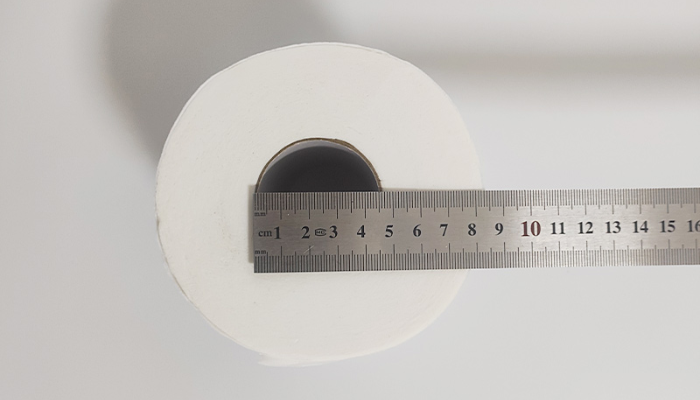
The humble toilet paper roll is an indispensable part of modern daily life, yet few people stop to consider the precise geometry that makes it fit seamlessly onto a bathroom holder. Understanding toilet paper roll circumference is more than just a quirky trivia exercise; it directly affects product value, bulk storage planning, dispenser compatibility, and environmental sustainability. As manufacturers continue to adjust roll sizes, sheet counts, and core densities, knowing how to measure and evaluate these dimensions helps you make smarter, more cost-effective purchasing decisions for your home or business.
Whether you are trying to fit mega rolls into a tight vintage dispenser, calculating storage capacity for a commercial facility, or designing custom bathroom fixtures, the physical dimensions of a roll matter significantly. Beyond simple convenience, the outer boundary of a roll determines how smoothly it spins, how much paper you get per purchase, and how often you need to replace it. In this comprehensive guide, we will unpack the exact science of toilet paper roll geometry, break down standard market sizes, explore the impact of sheet thickness, and provide actionable tips to maximize your bathroom inventory.
The Fundamentals of Toilet Paper Roll Circumference and Geometry
To understand the physical footprint of a standard roll, it helps to start with basic geometric principles. Toilet paper roll circumference refers to the total distance around the outer edge of a fully wrapped roll. Mathematically, this distance is directly tied to the overall outer diameter through the formula $C = \pi \times d$, where $C$ represents the circumference, $\pi$ is approximately $3.14159$, and $d$ is the outer diameter. While most consumers are accustomed to measuring linear height or core width, circumference provides the truest measure of a roll’s total volume when combined with its physical width.
Because a toilet paper roll is essentially a tightly wound cylinder with a hollow core, its outer circumference contracts as sheets are used. When fresh out of the pack, a standard consumer roll typically features an outer diameter ranging between $4.0$ and $4.5\text{ inches}$, translating to a starting circumference of roughly $12.5$ to $14.1\text{ inches}$. As paper is unrolled, this outer measurement shrinks continuously until it reaches the inner core, which maintains a fixed circumference of roughly $5.0$ to $5.2\text{ inches}$ based on a standard $1.6\text{ inch}$ cardboard tube diameter.
Standard, Double, and Mega Rolls: Comparing Dimensions Across Sizes
The toilet paper market has evolved dramatically over recent decades, moving away from single standard rolls toward high-density configurations marketed as double, mega, or super mega rolls. A traditional standard roll usually features an outer diameter of approximately $4.0\text{ inches}$ ($12.57\text{ inches}$ in circumference), while modern “Mega Rolls” often reach an outer diameter of $5.0$ to $5.5\text{ inches}$. This yields an outer toilet paper roll circumference of up to $17.2\text{ inches}$, representing a substantial increase in physical bulk and total sheet capacity.
| Roll Size Type | Typical Diameter (Inches) | Approx. Outer Circumference (Inches) | Estimated Sheet Count (2-Ply) |
| Standard Roll | $4.0\text{ in}$ | $12.57\text{ in}$ | 150 – 200 |
| Double Roll | $4.3\text{ in}$ – $4.5\text{ in}$ | $13.51\text{ in}$ – $14.14\text{ in}$ | 300 – 350 |
| Mega Roll | $5.0\text{ in}$ – $5.2\text{ in}$ | $15.71\text{ in}$ – $16.34\text{ in}$ | 450 – 480 |
| Super Mega Roll | $5.5\text{ in}$ – $6.0\text{ in}$ | $17.28\text{ in}$ – $18.85\text{ in}$ | 600+ |
| Commercial Jumbo | $9.0\text{ in}$ – $12.0\text{ in}$ | $28.27\text{ in}$ – $37.70\text{ in}$ | 1,000+ |
These variations create direct challenges for household fixtures. While mega rolls reduce the frequency of roll changes, their larger outer boundaries frequently rub against wall-mounted brackets or fail to fit inside recessed tissue holders designed for mid-20th-century standard dimensions. Choosing the correct size requires balancing sheet volume against the physical clearance available in your specific dispenser.
How Sheet Count, Ply Thickness, and Roll Density Affect Total Volume
Outer dimensions are not determined by sheet count alone; ply depth and winding tension play an equally critical role in shaping the final boundary. A roll containing 300 sheets of 3-ply paper will have a significantly larger toilet paper roll circumference than a roll containing 300 sheets of thin, 1-ply paper. Ultra-soft multi-ply varieties utilize micro-embossing techniques that trap air between layers, adding structural loft and increasing outer volume without necessarily adding extra paper fiber.
Winding tension during manufacturing further alters these dimensions. Commercial manufacturers use high-speed automated rollers to wind tissue onto cardboard tubes. High-density winding yields a firmer, more compact roll with a smaller outer footprint, while low-tension winding creates a softer, fluffier roll that takes up more physical space despite having identical paper length. Consequently, two rolls with identical outer circumferences can contain vastly different amounts of usable paper depending on their density and ply construction.
Measuring Toilet Paper Roll Dimensions for Custom Holders and Commercial Dispensers
Accurately measuring tissue dimensions is crucial for architects, commercial facility managers, and interior designers selecting hardware. To measure the toilet paper roll circumference accurately, wrap a flexible tailor’s tape measure around the widest point of an unused roll, ensuring the tape lies flat without compressing the soft outer paper layers. Alternatively, measure the outer diameter with a rigid ruler or caliper and multiply that measurement by $\pi$ ($3.14159$).
For commercial installations, clearance measurements must account for both the starting circumference and the spindle placement. Dispensers require at least $0.5\text{ inches}$ of radial clearance beyond the maximum unrolled radius to prevent binding, torn sheets, or excessive resistance during unrolling. When specifying hardware for high-traffic environments, verifying these tolerances prevents costly dispenser retrofits and ensures smooth operation across different supply brands.
Eco-Impact, Packaging Logistics, and the Future of Roll Geometry
The physical size of a roll has far-reaching implications for transport logistics, carbon footprints, and packaging efficiency. Shipping larger toilet paper roll circumference products means fewer total rolls fit into a single freight container or truckload, increasing distribution costs and fuel emissions per unit. To combat these inefficiencies, manufacturers are increasingly experimenting with compressed roll technology, vacuum-packing rolls flat for transit so they rebound to their normal circular shape upon opening.
Simultaneously, the industry is shifting toward coreless toilet paper rolls. Traditional cardboard cores take up a fixed $1.6\text{ inch}$ inner diameter—a hollow space that contributes nothing to usable tissue capacity. By eliminating the inner core, manufacturers can wind tissue tightly from the center outward, reducing overall package volume while maintaining or increasing total usable sheet count. These innovations highlight how optimizing simple geometric dimensions leads to more sustainable supply chains and reduced landfill waste.
Frequently Asked Questions (FAQs)
1. What is the average toilet paper roll circumference?
The average outer circumference of a standard household toilet paper roll ranges between $12.5\text{ inches}$ and $14.1\text{ inches}$ (based on an outer diameter of $4.0$ to $4.5\text{ inches}$). Mega rolls often feature circumferences of $15.7\text{ inches}$ or more.
2. How do you calculate the circumference of a toilet paper roll?
You can measure it directly using a flexible measuring tape wrapped around the middle of the roll. Alternatively, measure the outer diameter with a ruler and multiply that figure by $\pi$ ($3.14159$).
3. Why don’t mega toilet paper rolls fit in older holders?
Older or recessed bathroom holders were built around traditional standard rolls with an outer diameter under $4.5\text{ inches}$. Mega rolls feature a larger outer circumference and diameter, causing them to jam against the back wall or spindle housing.
4. Does a larger circumference always mean more paper?
Not necessarily. A larger outer size can be the result of loose winding tension or thick, multi-ply micro-embossing that traps air between layers. Always check the total square footage or sheet count on the packaging alongside physical size.
5. What is the circumference of a standard toilet paper cardboard core?
The inner cardboard core typically has an outer diameter of $1.6\text{ inches}$, which equals an inner core circumference of approximately $5.02\text{ inches}$.
6. What is the difference in circumference between 1-ply and 2-ply rolls?
Assuming equal sheet counts and winding density, a 2-ply roll will have a larger outer diameter and circumference because each sheet is twice as thick. However, manufacturers often adjust winding tension to keep pack sizes relatively consistent.
7. How does coreless toilet paper affect total roll dimensions?
Coreless rolls eliminate the empty center tube, allowing paper to be wound from the absolute center. This yields more usable sheets within the same outer physical boundary compared to a traditional cored roll.
8. What are commercial jumbo roll circumferences?
Commercial jumbo rolls used in public restrooms typically have outer diameters ranging from $9\text{ inches}$ to $12\text{ inches}$, resulting in circumferences between $28.27\text{ inches}$ and $37.70\text{ inches}$.
9. How do extender tabs help with large roll circumferences?
Roll extenders attach to existing wall-mounted holders, pushing the spindle outward away from the wall. This extra clearance allows high-circumference mega rolls to rotate freely without jamming.
10. How does compressed toilet paper packaging work?
Compressed packaging squashes the hollow core flat during transit to reduce shipping volume. Once unpacked, the roll springs back to its circular shape, restoring its original outer diameter and circumference.